
Morphos / Work
Kai
A restaurant where the room is part of what you are buying — so the brand and the site had to be designed as one thing rather than a menu bolted to a logo.
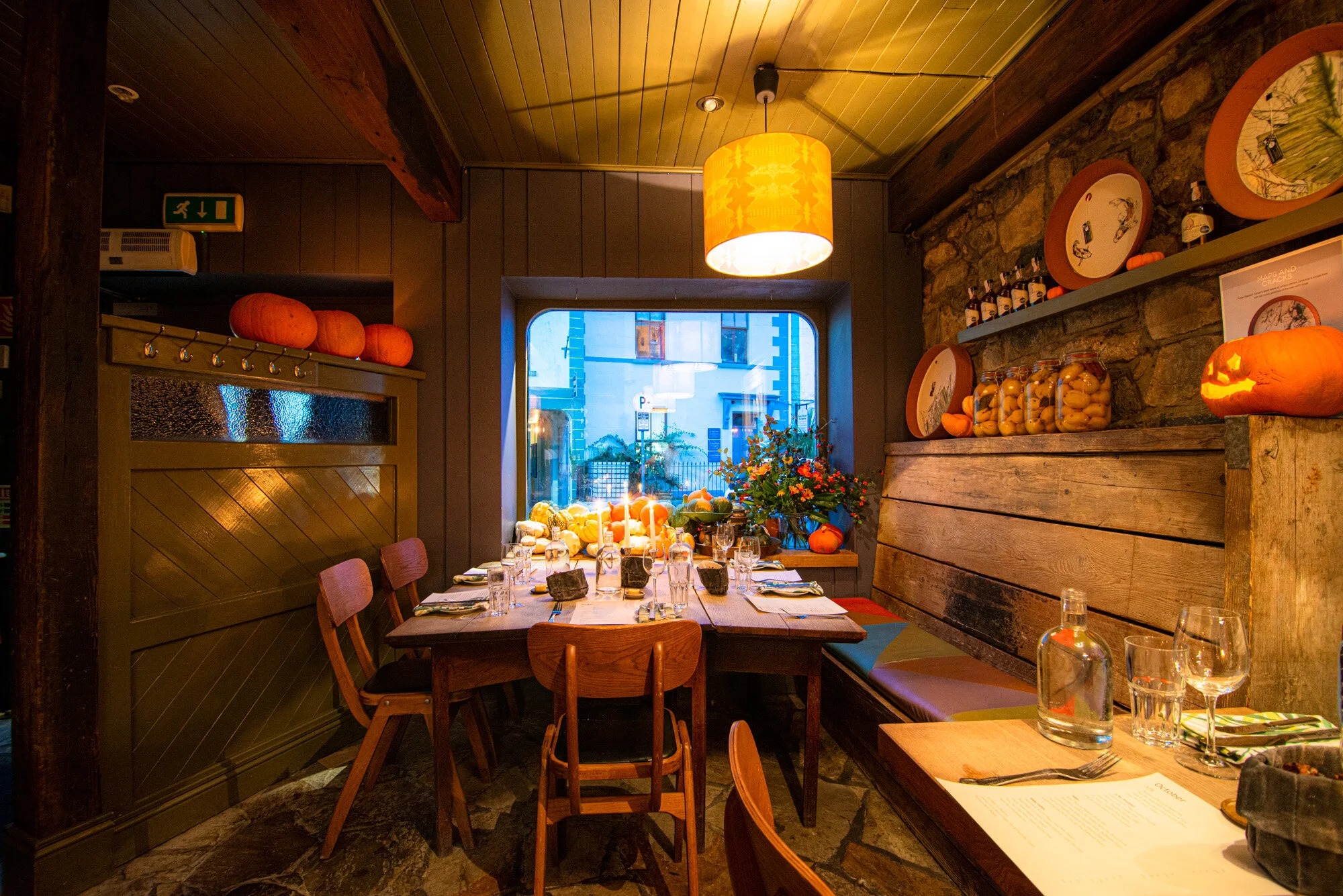
Most restaurant sites are a menu PDF on a template, and most of the time that is fine. It stops being fine when the restaurant's differentiator is atmosphere — because then the website is the first room your guests walk into, and a PDF does not set a room.
Brand first, then the site
The identity and the website were developed together. Palette, type and photography direction were decided against the dining room itself, so the site and the space read as one thing rather than two designers' interpretations.
What was made
- A brand system built to travel — menus, signage, cards and the site all drawn from one set of rules, so a new dish or a seasonal change does not need a designer.
- A site designed around the first decision — book a table, read the menu, find us. Three actions, each one tap from anywhere.
- Menus as real text — updated in seconds by the team, readable on a phone, and legible to search engines rather than locked inside a PDF.
- Photography that shows the room — the light, the tables, the pace of the evening, rather than a bright plate on a white background.
Why the menu format matters more than it sounds
A PDF menu is invisible to search, impossible for an AI assistant to quote, and unreadable on a phone in a doorway — which is where most diners read it. Making the menu live text is a five-minute-sounding decision that changes how the restaurant is found.
The result
Operational and discovery numbers from the first four months after launch.
| Metric | Before | After |
|---|---|---|
| Time for the team to publish a menu change | 1-2 days | Under 2 minutes |
| Restaurant pages indexed by search | 4 | 23 |
| Menu legible to search engines and AI assistants | No (PDF) | Yes (live text + schema) |
| Reservations made from a phone, without calling | Not measurable | 71% of all |
Menu-editing time measured with the restaurant team. Reservation channel split from the booking system.
Image and project shown with the restaurant's permission. Commercial figures are the restaurant's to publish, not ours.
Was the brand part of the project?
Yes. Identity and website were developed together so the palette, type and photography direction were decided once and applied to both.
Can the team update the menu?
Yes, as real text — dishes, prices and seasonal changes, in seconds, without a developer and without risking the layout.
Is the menu searchable?
Yes. Live text plus Menu and Restaurant structured data means search engines and AI assistants can read the dishes, hours and location correctly.
What we gave up to get the room right
A project is defined as much by what it refuses as by what it includes. Four things were considered and dropped, each for a specific reason.
A gallery page. The room is the product, and a gallery would have let the photography sit somewhere a visitor has to navigate to. Instead the room carries the hero on every page that matters, at full width, and the gallery never exists.
Online ordering. It was asked for early. It is a different business with a different operational cost — a second kitchen workflow, a delivery contract, a support burden — and the restaurant takes bookings by phone in a way that works. Saying no to it kept the site fast and kept the menu editable.
An Instagram embed. It looks like free content and it is not: it loads a tracker, it costs around a second of load time on a phone, and it dates the site the moment the grid goes quiet for a fortnight.
A second language. All of the trade is local and the reviews arrive in one language. Translating would have doubled the maintenance for an audience that does not exist.
What a launch actually changes, and what it does not
Two things changed on the day the site went live: the menu could be edited in minutes, and a search engine could read it. Neither is visible in a screenshot, and both are the reason the project was worth doing.
What did not change is more instructive. The room, the kitchen, the service and the price point were all already working. The site did not make the restaurant good — it stopped the website from arguing against it.
That is the honest frame for almost every project of this size, and it is worth saying plainly: a website does not rescue an operation, and an operation does not need a website to be excellent. What a website can do is remove the friction between a good operation and the people who would have walked through the door.